The title of this post may look like alphabet soup, but that's no excuse for confusion. We've been here before. The GED was followed by the HiSET and TASC back in 2014, resulting in CCRS aligned tests for all adults seeking HSE credentials in the USA. However, that higher level of rigor was mostly felt by the adult learners and their teachers who were working at the 8-12th grade reading level. Now, adult basic education students are being held to the higher standards of problem solving skills than ever before. So, how do educators cope? How do learners continue measurable skill gains (MSGs)?
Highest Common Denominator
These tests are bound to be harder. Early reports are that students are being bumped down a level and have to raise themselves back up. If that weren't hard enough, they have to show improvement in areas they haven't been studying before and attain skills that teachers may not be accustomed to teaching. The TABE 11/12 and CASAS GOALS tests are supposed to measure the same skills as the three HSE test options, which is a silver lining in all of this, because the field has been wanting this allignment (or common denominator, if you will). The problem for teachers is that it's a higher level of rigor across the board. ABE students will need to learn complex problem solving strategies that were previously reserved for HSE students. That means gains could be harder to attain.
How to ensure gains: One learner at a time
New problems call for new solutions, not the same old approach to teaching and learning. The TABE/CASAS tests present new problems, but luckily we are in a time of instructional innovation. The standard classroom approach is now much more malleable, both by teachers and learners. Based Teachers can create their own hybrid approaches that blend old-school and new-school instruction and practice. The determining factor is mostly the teacher's aptitude and attitude towards technology and their ability to utilize additional planning and support time for their students' distance learning efforts. Learners can also speak up in their process and have some say about the mix of hands-on and edtech experiences they're leaning on in their preparation. So, both teachers and students need to make sure they get the most appropriately blended learning experience to be truly individualized to the learners' needs.
When in doubt, innovate
Recycled products and approaches are the problem. Let's be clear about that. What worked on the old test will not work on these new tests. But books keep getting released with new covers and the same old pages full of practice problems inside. Online learning experiences keep getting relabled and realigned, but area they really teaching to the spirit of the new tests, or do the lesson titles just loosely align to the skills being measured? Over the past 20yrs, my biggest critique of publisher products in the field of adult ed has always been
The responsibility for innovation actually doesn't fall on the publishers. It's the consumers (instructors) who have to decide what tools they're going to buy and put into practice. If teachers buy on brand name alone or because of an alignment or a buzz-word on the cover, then they may wind up with old products with new wrappers. Be critical as a consumer. Innovate your approach to reach higher benchmarks on these more rigorous tests. There seem to be fewer publishers serving the field of adult ed now, so teachers need to make sure they're getting the best possible products for their needs.
The last and most important frontier for innovation and informed decision-making in the learning process is the learners' realm. They decide how they're going to work, when and with what tools. Successful blended learning empowers the learner to add in edtech when it suits them, or to ask for hands-on help when appropriate. The more we can empower learners to ask for help and use the help they're given, the better able they will be to overcome challenges and make gains.
Quick plug: Essential Education has incorporated a Virtual Tutor element into ever lesson in our new ABE Essentials workbooks. The books were written from scratch for the CCRS and they're a truly innovative and empowering consumable TABE/CASAS prep product.
The future is uncertain
What's next? I think teachers and publishing companies both need to keep raising the bar and the standards for edtech and classroom learning tools and approaches. Change is the only constant. However, we do have time to get comfortable with the ABE/HSE tests that we've been given. It's time for innovative initiatives, experimentation, trial and error and adjustment. We will get better results, but only if we make the necessary changes, whatever those turn out to be.
Learning Web-based Learning. Teaching Online Teachers. Changing the System of Adult Education.
Tuesday, October 15, 2019
Friday, October 4, 2019
Where Have I Been?
I haven't been posting here the past three years, and it's not for lack of attention or desire or actual developments and changes in the field of blended and distance learning. In fact, there have been so many changes taking place when it comes to edtech in the field of adult education that I've been scared (for lack of a better word) to open my mouth and interfere or otherwise have an unintended impact. State agencies don't want publishers directing their distance ed policies or blended learning initiatives (or at least, they shouldn't). So, that puts me in an awkward position at times. Nonetheless, we're living in exciting and changing times for our field, and I don't want to let it all pass by without comment. In short, I've been too quiet for too long in this space, and I'm looking to change that ASAP. Starting today.
In the past three years, I've been spending a lot of time in NC and PA, which isn't too hard, since I live in VA, sandwiched between the two states. Distance education policies have been solidified in both of those states in recent years, so I had a lot more new opportunities to explore and check up on at the local level. Attitudes tend to change quickly when state directives are issued, online 'proxy contact' hours become reportable for funding and when blending online and classroom learning becomes the unavoidable topic du jour at every local in-service for instructors and teacher association state conference.
Finally, people are picking up what I'm putting down, as they say. I supposed that's what a real change agent does sometimes. We don't drag people where we want them to go. Sometimes we wait until they're ready and we simply serve as their crossing guard (ahem, my last name is Guard). When people are ready, they'll ask for help or advice. One of the basic tenets of adult education: adults want to be in control of their learning.
So, I guess the real question is not 'Where Have I Been?' The real question is, 'Where Am I Going?' Well, I think you'll be surprised. It's a little bit forward to new frontiers and a little bit backward to pick up the stragglers. I'll try to lay it out over my next few blog posts (making an outline of those now). And that answers a third question, 'Where Will You Be?' The answer is RIGHT HERE. Please share and pop back by so we can take this adventure together. And all of this begs the question that I for you, 'What Do You Need?' Speak up and I'll do my best to help.
In the past three years, I've been spending a lot of time in NC and PA, which isn't too hard, since I live in VA, sandwiched between the two states. Distance education policies have been solidified in both of those states in recent years, so I had a lot more new opportunities to explore and check up on at the local level. Attitudes tend to change quickly when state directives are issued, online 'proxy contact' hours become reportable for funding and when blending online and classroom learning becomes the unavoidable topic du jour at every local in-service for instructors and teacher association state conference.
Finally, people are picking up what I'm putting down, as they say. I supposed that's what a real change agent does sometimes. We don't drag people where we want them to go. Sometimes we wait until they're ready and we simply serve as their crossing guard (ahem, my last name is Guard). When people are ready, they'll ask for help or advice. One of the basic tenets of adult education: adults want to be in control of their learning.
So, I guess the real question is not 'Where Have I Been?' The real question is, 'Where Am I Going?' Well, I think you'll be surprised. It's a little bit forward to new frontiers and a little bit backward to pick up the stragglers. I'll try to lay it out over my next few blog posts (making an outline of those now). And that answers a third question, 'Where Will You Be?' The answer is RIGHT HERE. Please share and pop back by so we can take this adventure together. And all of this begs the question that I for you, 'What Do You Need?' Speak up and I'll do my best to help.
Thursday, December 22, 2016
We Need to Listen
Instead of my annual list of 'edtech books I want for xmas,' I thought I'd try something different. Besides, the inspiration for innovative teaching and learning leadership probably won't come to you through a book specifically on that topic. And I want to sneak my provokations past the defenses of those who say they don't have time to read. Fine. Listen.
Podcasts are teaching people new things all the time. Think of it like a radio dial with every station being chock full of engaging and inspiring directives and explorations of every topic you never knew you needed explained. For our purposes, we're going to start with education and technology. But because there are so many issues bound up with those and to overcome that perenial complaint that these aren't specific enough to adult education (and you might still say you're stuck in a rut anyhow), I built this list of lists of podasts to light a thousand fires under you. One way or another, they are all about teaching and learning. Not only are you the student, you are getting one-on-one tutoring by listening to podcasts.
Please comment to share some of the gems you discover. What podcast was your favorite? What are the common threads across all of these lists? Note that I included the full URL here for you to see instead of embedding the link in the text. Look at all these sources talking about podcasts! They're talking about learning. They're sharing the content that people created to educate one another and to put the life lessons in the pathway of those who might need it. It's marketing with a social or even viral exponential expansion. Maybe one day, we can get our messages leapfrogging across these platforms. Now dive in and listen up and share.
Best Education Podcasts
https://www.edutopia.org/blog/best-education-podcasts-betty-ray
Best Edtech podcasts
http://www.educationdive.com/news/5-ed-tech-podcasts-you-should-listen-to/218968/
More Edtech podcasts
http://blog.greenlightlearningtools.com/2015/09/16/best-edtech-podcasts/
Best Learning Podcasts
http://www.gettingsmart.com/2015/02/60-podcasts-check/
Best Self-Improvement Podcasts
https://player.fm/featured/self-improvement
Best Change Your Life Podcasts
http://www.elephantjournal.com/2015/09/the-10-best-podcasts-to-help-you-change-your-life/
Best Get Off Your Ass Podcasts
http://www.xojane.com/healthy/5-motivational-podcasts-to-get-you-off-your-ass
Best Motivational Podcasts
http://podcastpals.net/the-best-motivational-podcasts-2016/
Best Social Media Marketing Podcasts
http://podcastpals.net/the-best-motivational-podcasts-2016/
Best Leadership Podcasts
https://stuffyoucanuse.org/10-best-leadership-podcasts/
More Leadership Podcasts
http://www.inc.com/marla-tabaka/5-podcasts-that-will-give-you-a-leadership-edge.html
Best Entrepreneur Podocasts
http://www.huffingtonpost.com/james-carbary/best-podcasts-for-entrepreneurs_b_8828900.html
Best All-Around Podcasts
http://www.complex.com/pop-culture/the-30-best-podcasts-right-now/risk
Okay... maybe just one book for Xmas.
Podcasts are teaching people new things all the time. Think of it like a radio dial with every station being chock full of engaging and inspiring directives and explorations of every topic you never knew you needed explained. For our purposes, we're going to start with education and technology. But because there are so many issues bound up with those and to overcome that perenial complaint that these aren't specific enough to adult education (and you might still say you're stuck in a rut anyhow), I built this list of lists of podasts to light a thousand fires under you. One way or another, they are all about teaching and learning. Not only are you the student, you are getting one-on-one tutoring by listening to podcasts.
Please comment to share some of the gems you discover. What podcast was your favorite? What are the common threads across all of these lists? Note that I included the full URL here for you to see instead of embedding the link in the text. Look at all these sources talking about podcasts! They're talking about learning. They're sharing the content that people created to educate one another and to put the life lessons in the pathway of those who might need it. It's marketing with a social or even viral exponential expansion. Maybe one day, we can get our messages leapfrogging across these platforms. Now dive in and listen up and share.
Best Education Podcasts
https://www.edutopia.org/blog/best-education-podcasts-betty-ray
Best Edtech podcasts
http://www.educationdive.com/news/5-ed-tech-podcasts-you-should-listen-to/218968/
More Edtech podcasts
http://blog.greenlightlearningtools.com/2015/09/16/best-edtech-podcasts/
Best Learning Podcasts
http://www.gettingsmart.com/2015/02/60-podcasts-check/
Best Self-Improvement Podcasts
https://player.fm/featured/self-improvement
Best Change Your Life Podcasts
http://www.elephantjournal.com/2015/09/the-10-best-podcasts-to-help-you-change-your-life/
Best Get Off Your Ass Podcasts
http://www.xojane.com/healthy/5-motivational-podcasts-to-get-you-off-your-ass
Best Motivational Podcasts
http://podcastpals.net/the-best-motivational-podcasts-2016/
Best Social Media Marketing Podcasts
http://podcastpals.net/the-best-motivational-podcasts-2016/
Best Leadership Podcasts
https://stuffyoucanuse.org/10-best-leadership-podcasts/
More Leadership Podcasts
http://www.inc.com/marla-tabaka/5-podcasts-that-will-give-you-a-leadership-edge.html
Best Entrepreneur Podocasts
http://www.huffingtonpost.com/james-carbary/best-podcasts-for-entrepreneurs_b_8828900.html
Best All-Around Podcasts
http://www.complex.com/pop-culture/the-30-best-podcasts-right-now/risk
Okay... maybe just one book for Xmas.
Thursday, September 22, 2016
We Need to Talk
I'm not here to tell you how to do your job or cry foul about every detail of adult education programs' way of doing business using technology. But some or the core messages of progress that online learning has brought are not reaching everybody and not transferring from ideals to practice. I routinely see small, regional and even statewide organizations operating in a silo, as though there aren't similar silos all around... within earshot. We need to talk to one another.
I've been negligent of late about posting some of the blended and distance resources that Essential Education has been a part of recently. Here are a few of them linked below. Please share widely. But the big one that I wanted to mention is a group previously known as Project IDEAL. As long as I've been in the field of adult ed, there has been a national group that centralized the basic know-how of facilitating online learning. When I worked for the state of Virginia, we looked at the IDEAL handbook, borrowed from their website, but mostly used it to calibrate or confirm what we were already doing. That was a long time ago. Much has changed in the field (WIOA, ahem) and edtech innovations have made some of the tech integration by teachers second nature. In an effort to catch up and revitalize (my word-choice), Project IDEAL has been moved under the World Ed umbrella and become part of their EdTech Center.
I don't know what will come of the new IDEAL Consortium or what direction it will take. But I do know that it has always been meeting place of states doing or interested in doing distance education. I hope that continues and that information sharing is more immediate, so the field of adult ed can ride the wave of innovation instead of feeling that it has passed us by. Now more than ever, states need to compare policies and best practices and lists of approved publishers, etc. We can't afford to have any size adult ed provider operating in the dark with know-how from the dark ages when a white board was cutting edge teaching technology. Otherwise, learners will find other ways to meet their needs or fall prey to opportunistic scams. So, let's talk and then take action.
I've been negligent of late about posting some of the blended and distance resources that Essential Education has been a part of recently. Here are a few of them linked below. Please share widely. But the big one that I wanted to mention is a group previously known as Project IDEAL. As long as I've been in the field of adult ed, there has been a national group that centralized the basic know-how of facilitating online learning. When I worked for the state of Virginia, we looked at the IDEAL handbook, borrowed from their website, but mostly used it to calibrate or confirm what we were already doing. That was a long time ago. Much has changed in the field (WIOA, ahem) and edtech innovations have made some of the tech integration by teachers second nature. In an effort to catch up and revitalize (my word-choice), Project IDEAL has been moved under the World Ed umbrella and become part of their EdTech Center.
I don't know what will come of the new IDEAL Consortium or what direction it will take. But I do know that it has always been meeting place of states doing or interested in doing distance education. I hope that continues and that information sharing is more immediate, so the field of adult ed can ride the wave of innovation instead of feeling that it has passed us by. Now more than ever, states need to compare policies and best practices and lists of approved publishers, etc. We can't afford to have any size adult ed provider operating in the dark with know-how from the dark ages when a white board was cutting edge teaching technology. Otherwise, learners will find other ways to meet their needs or fall prey to opportunistic scams. So, let's talk and then take action.
- Blended Learning in the Adult Ed Classroom is a webinar by David Rosen, hosted by World Ed and introduced by me. It's also a print resource that you can download for free right here.
- Making the Most of Distance Learning is a free professional development webinar that I gave with Dan Griffith, VP of Sales at Essential Education. We put on a different topic every month. Use this link to sign up for future Tuesday With Essential ED (TWEED) webinars.
Friday, January 8, 2016
If We're Not Lost, Where Can We Be Found?
Over the holiday break, it occurred to me that newspapers and websites would soon be posting their year in reviews and their predictions for the year ahead. We need those kinds of bookends in the field of adult education, especially with so many changes afoot. We need to process, discuss, reflect and gear up to tackle new challenges. Alas, I feel like we're always in reactive mode, struggling to catch up and adjust to our circumstances. That's why we need to rely on more modern communication tools than the phone tree.
When trying to come up with my list of INs and OUTs going into 2016, I asked for input on Twitter using the #adultedu hashtag. No response to multiple attempts. I tried my Linked-In network of 500+ connections and I think I posted it on an adult education interest group as well. Obviously, holiday break isn't the best time to get a hold of educators. Or maybe I was using the wrong medium. I tried Facebook, but I only have a few professional connections there and the one who responded preferred to table all work-talk until class was back in session. During the same time, I've been deluged with notices about people broadcasting from Periscope. And others telling me that Snapchat is the next big thing. Neither indicators were from adult educators, but it piqued my interest and made me a little jealous. Instagram is the platform that I've taken to the most in 2015, but haven't found any adult ed angles for professional development. Going into 2016, I've vowed to learn Snapchat and Periscope... or at least try my hand at them.
So this is where I pose the question to you: Where in the digital world can you find adult educators? What is our preferred platform? Where are the professional development discussions happening? How can you take the pulse of adult educators and high school equivalency teachers? Please chime in with a comment. Any insights are appreciated, not just by me, but also by the isolated educators who wonder onto this site and perhaps have some of the same questions and a desire for more input, camaraderie and interconnectedness.
When trying to come up with my list of INs and OUTs going into 2016, I asked for input on Twitter using the #adultedu hashtag. No response to multiple attempts. I tried my Linked-In network of 500+ connections and I think I posted it on an adult education interest group as well. Obviously, holiday break isn't the best time to get a hold of educators. Or maybe I was using the wrong medium. I tried Facebook, but I only have a few professional connections there and the one who responded preferred to table all work-talk until class was back in session. During the same time, I've been deluged with notices about people broadcasting from Periscope. And others telling me that Snapchat is the next big thing. Neither indicators were from adult educators, but it piqued my interest and made me a little jealous. Instagram is the platform that I've taken to the most in 2015, but haven't found any adult ed angles for professional development. Going into 2016, I've vowed to learn Snapchat and Periscope... or at least try my hand at them.
So this is where I pose the question to you: Where in the digital world can you find adult educators? What is our preferred platform? Where are the professional development discussions happening? How can you take the pulse of adult educators and high school equivalency teachers? Please chime in with a comment. Any insights are appreciated, not just by me, but also by the isolated educators who wonder onto this site and perhaps have some of the same questions and a desire for more input, camaraderie and interconnectedness.
Monday, January 4, 2016
What's IN and What's OUT in Adult Education in 2016
There is no double that the field of adult education is going through BIG changes. Out with the old and in with the new is the only way things change. But, what are those changes specifically? What are the buzz-words and terms that need to be on the tips of our tongues in 2016? What practices do we need to put on the shelf indefinitely? We've banished digitized worksheet to the dustbin in past years. We've learned that practice testing is not teaching, at least not for obtaining any long-term skill development. Technology has made those tests both more and less accessible from various sources, but how we use the results is clearly innovating. So, please chime in with your new and old ideas and practices. I'll get the ball rolling with a few of my own.
OUT with 2015
-------
- Common Core
- Traditional, single-medium, instruciton
- Fighting against implementing technology
- An isolated field of adult ed
- Heads on desks
- Tired unresponsive social media
- WIA
- Mind-numbing Power-point style learning
- Cut scores
- Stopping out and retention problems
- Race to the bottom with ever-lowering expectations
IN with 2016
----
- College and Career Readiness
- Blended Learning
- Fighting our biggest challenges with technology as our weapon of choice
- Adult ed as part of workforce development
- Heads in the clouds
- Exciting participatory social media
- WIOA
- In-depth activities for building critical thinking skills
- Skill mastery
- Bridging time/place gaps with distance ed solutions
- Raising results by raising expectations and setting ambitious goals
Monday, December 21, 2015
All I Want for Xmas is FREE Resources
Usually, at the end of the year, I post about the edtech books that I'm most looking forward to reading, and I encourage you to go find them and read them yourselves. This year is going to be a bit different. Sure, you can still go to Amazon and look at the most popular books in the Computers and Technology or the Digital and Online Learning subjects within the Schools and Teaching topic at Amazon. However, much of the inspiration that the field of adult education needs is finally coming from the field's own practitioners and instructional designers.
This year at the COABE conference, we gave out hundreds of hard copies of our College and Career Readiness Roadmap to make it very plain how teachers can adjust to the instructional shifts taking place and incorporate more technology fluency into their instruction. You can get your own copy by emailing info@essentialed.com. If you already have a copy, please share your feedback here.
More specific to online distance learning is our new teacher's guide: Blended Learning in the Adult Education classroom (download it here). The guide was presented at COABE by its co-author and edtech guru, David Rosen, and again via webinar last month with WorldEd (see the webinar recording here).
This year at the COABE conference, we gave out hundreds of hard copies of our College and Career Readiness Roadmap to make it very plain how teachers can adjust to the instructional shifts taking place and incorporate more technology fluency into their instruction. You can get your own copy by emailing info@essentialed.com. If you already have a copy, please share your feedback here.
More specific to online distance learning is our new teacher's guide: Blended Learning in the Adult Education classroom (download it here). The guide was presented at COABE by its co-author and edtech guru, David Rosen, and again via webinar last month with WorldEd (see the webinar recording here).
Thursday, October 29, 2015
Let the Maestro Be Your EdTech Guide on the Side
Facilitating blended learning is easy when you have good models and mentors to turn to for inspiration. When I got started with Virginia's distance learning program ten years ago, one of the innovative educators that I looked to was David Rosen. His online repositories of resources and his work with the Learner Web made him an authority in the edtech field. He was WAY AHEAD of most state's leadership, much less the average practitioner. But now the field is catching up. Blended learning is not just a lofty goal. It's a standard practice. I should know, because I'm meeting with increasing enthusiasm while talking with teachers about Essential Education's innovative adaptive learning programs.
These stars aligning made it a natural choice to collaborate with David Rosen on a FREE downloadable Blended Teacher's Guide. The publication of this resource has prompted WorldEd to host a FREE webinar with David Rosen on November 13th at 2pm Eastern. YOU CAN REGISTER HERE. Please invite your fellow teachers, convene a program-wide meeting around the webinar and spread the word on social media.
Monday, April 13, 2015
Get Connected at COABE in Denver
It is with excitement and some embarrassment that I resurface with this post having been MIA from my own blog since before Christmas in 2014. Maybe it would be plausible to say that I was busy reading all the edtech books I asked for last year. like a bear hiding out in my cave for the winter. Or I could say that 2014 presented so many changes and challenges (and growth!), that I'm still catching my breath and slowly turning the page toward 2015. But the reality is that my slightly overwhelming workload coincided with a few health issues (think red spots covering 90% of my body) and family-life juggling acts that the sum total simply bumped this blog and my social media routine to the back burner.
In terms of Maslow's hierarchy of needs, I've just been dealing with basic needs while my ambitious aspirations and my higher self haven't been a high priority. It's certainly okay to tread water or maintain the status quo from time to time, but I think you can imagine that I am not satisfied with this state of affairs. That's why I foresee a comeback and hopefully it is precipitated by the awesome source of inspiration that is the annual COABE conference. Yes, I will be in Denver, looking forward to seeing you, and giving you lots of great new resources. Please say hi.
Here's a message that we sent out to Essential Education's contacts to build the buzz about what we're about to release to the field (use this link to sign up for the Essential Education newsletter email list):
In terms of Maslow's hierarchy of needs, I've just been dealing with basic needs while my ambitious aspirations and my higher self haven't been a high priority. It's certainly okay to tread water or maintain the status quo from time to time, but I think you can imagine that I am not satisfied with this state of affairs. That's why I foresee a comeback and hopefully it is precipitated by the awesome source of inspiration that is the annual COABE conference. Yes, I will be in Denver, looking forward to seeing you, and giving you lots of great new resources. Please say hi.
Here's a message that we sent out to Essential Education's contacts to build the buzz about what we're about to release to the field (use this link to sign up for the Essential Education newsletter email list):
Wednesday, December 10, 2014
More EdTech Books for Xmas, Please.
As is my tradition of combining my Christmas wishlist with my passion for innovation and strategic changes in the field of adult education, here's what I'm reading or would like to be reading (hint, hint - don't get them for me, get them for yourself and your coworkers!).
Blended: Using Disruptive Innovation to Improve Schools
If you recall my frequent promotion of Clayton Christensen's Disrupting Class, this is the follow-up that puts meat on the bones and makes the blended learning prescription practical for educators. My coworkers say the book gives them more ideas than they know what to do with, which is a pretty good way to start 2015. Available here on Amazon.
Teaching Machines
A No.2 pencil is technology. So is your whiteboard, that old reliable overhead projector, the challkboard, etc. That's where this book starts in chronicling the phenomenon of introducing new tools in education. What changes result? What's worked and what hasn't. Maybe when we're struggling to integrate the features of a new LMS or a student-centered learning portal we can look to the past for some pointers, because teachers have always been riding waves of innovation from the dawn of the classroom to the removal of the classroom walls. From what I see online, it looks like this author is at UVA, just an hour from me. I may have to reach out and say hey. Available on Amazon here.
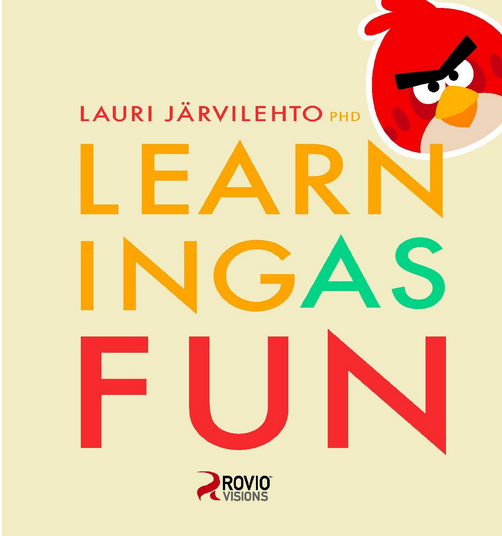
Learning As Fun
You had me at Angry Birds, though I feel silly thinking back on how much time I spent blitzing through the levels of that game, smashing everything in my path. Maybe I was learning important physics concepts? It doesn't look like this one is actually about Angry Birds, thankfully. From the publisher:
Drawing from the fields of motivational psychology, neuroscience and the philosophy of the mind, Learning as Fun shows that engagement, motivation and flow are the key factors in creating durable learning experiences, specifically in acquiring new skills and knowledge.
Sounds just like my boss talking about the latest update to GED Academy... The Kindle version is available through Amazon here.
Monsters of Education Technology
Not to undersell this book (I already ordered mine on Amazon), but Audrey Watters is prolific on the web. Go read her now. Since the book compiles her 2014 lectures, I'm guessing it's far-ranging and hard to synopsize. So, I included the table of contents, which is full of intrigue. And who doesn't like a good boogieman story? Or better yet, boogiemen debunked? Or both?
Authentic Learning in the Digital Age: Engaging Students Through Inquiry
Everywhere I go as an sales rep focused on adult education, I hear state-level admins and professional development trainers talking about securing deeper learning than the old drill and practice test prep through group work, exploring high-interest topics, and project based learning. And my response is to agree vigorously and try to talk about the ways technology, especially Essential Education's tech tools, can play an important role in deepening instruction. This book, I'm hoping, will be a great resource for teachers creating lesson plans in previously uncharted waters. Available on Amazon.
How to Teach Adults
As I work to help teachers align their instruction to whichever high school equivalency exam their state is using, I'm seeing a lot of people looking for quick fixes and shortcuts and sometimes openly calling for a more remedial assessment, which really makes me uneasy. Why are we educators in the first place? The debate over focusing on short-term gains versus long-term skills makes wonder how much of the adult education equation is up for debate. Maybe we need to start from the foundation and rebuild so we have a system that addresses a core adragogical mission in addition to passing scores on tests. The title says 'How' but all throughout he addresses the 'Why,' and I'll bet it strikes a chord with you. Look for a future post about Dan Spalding's perspective on adult ed, because it's a good one. Get yours from the author directly.
What Connected Educators Do Differently
It seems like techie teachers are just cut from a different cloth, but when you look at their lesson plans and their daily routines, it's not so hard to adopt some of their practices. This book will probably help with that, but you'll have to wait, because it comes out in February 2015 according to Amazon.
If you're squeamish about the idea of reading an edtech book (they're usually pretty exciting, actually), this one here may be a good primer. Or you can go back to my edtech book list from 2012 or the one from 2013.
Tuesday, November 4, 2014
Are We Making Our Learners Smarter or Dumber?
I'd like to blog about more of my inspirations as an educator, especially as I come across new stuff all the time via social media. Today, I listened to a talk by Annie Murphy Paul about intelligence being much more malleable and subjective than our learners' very finite and hard fought test scores may indicate. The more I think about it, this is really timely for the field of adult ed, as the fundamental mission is up for debate: credentials or skills? Short-term gain or better long-term outcomes? Annie Murphy Paul may hold a missing piece of the puzzle for advocates of lifelong learning.
The work that she is doing has me thinking about the way we teach adults in the classroom and/or at a distance. The conditions that we create for our learners has a much deeper impact than I had really considered before. She talks about micro-environments that make our learners smarter or less smart. And I immediately think about how the technology tools we use make minds really uptight and anxious or comfortable and free-flowing. What kind of micro-environments are being created by the various kinds of computer-based instruction software?
A few barely sketched out blog entries that I've been working on immediately come to mind and hopefully will get posted sooner than later thanks to the inspiring thoughts by Annie Murphy Paul. Issues of empowerment, creativity, enjoyment and confidence come to mind. What are your reactions to this talk about how we get smarter? Is there anything that you'll start doing differently right now?
The work that she is doing has me thinking about the way we teach adults in the classroom and/or at a distance. The conditions that we create for our learners has a much deeper impact than I had really considered before. She talks about micro-environments that make our learners smarter or less smart. And I immediately think about how the technology tools we use make minds really uptight and anxious or comfortable and free-flowing. What kind of micro-environments are being created by the various kinds of computer-based instruction software?
A few barely sketched out blog entries that I've been working on immediately come to mind and hopefully will get posted sooner than later thanks to the inspiring thoughts by Annie Murphy Paul. Issues of empowerment, creativity, enjoyment and confidence come to mind. What are your reactions to this talk about how we get smarter? Is there anything that you'll start doing differently right now?
Thursday, October 16, 2014
GED Academy Now Even More Mobile
For whatever reason, some mobile device operating systems will not play Flash-based content. For a while, it was just iOS, the operating systems on iPhones and iPads that refused flash. And for a while, I simply recommended downloading the Puffin app for $1.99 (the free version, in my experience, doesn't work as well) when encouraging GED Academy use via mobile learning.
However, now that many Android devices (smart-phones and tablets) have joined in refusing to play flash, Puffin has added GED Academy to their list of edu-cational sites that you can visit without paying for their app.
Below, I'm including the instructions that Essential Education's lead trainer, Kirsten Thomas, sent around to the rest of us so we could spread the word. So, here I am spreading the word. Enjoy!
Wednesday, September 17, 2014
Evaluating Arguments: Interdisciplinary and Online
One of the great educational potentials of technology and distance learning is the awesome avalanche of information and perspectives that comprise the internet. But what to do with all of it? Who has time to sort through it all? Which parts of the information superhighway are going to be on the test? How can we make the web relevant to each learner's college readiness needs and career pathway?
The answer is to embrace it all and struggle with it until you develop the skills to make sense of it (with a teacher's facilitation).
So, that's my intro for sharing several links from this month's Tuesdays with Essential Education webinar (email me at jason@essentialed.com for an invite). In this month's session, the topic was Evaluating Arguments, precisely the skill you need for separating fact from fiction, singling out correct answers, and comparing passages. It's not just a discreet skill for solving one problem worth 12 points on one section of a high school equivalency test.
Evaluating arguments is a transferable skill that is useful across multiple subject/content areas. And it requires interdisciplinary teaching. Focusing on transferable skills and interdisciplinary teaching is going to be increasingly important in adult education, especially in light of the Common Core and College and Career Readiness Standards' impact... and the internet can help.
For starters, here are a few links to assist with planning instruction for broadly impactful skills:
Wednesday, August 13, 2014
Math Activities Using the Living Wage Calculator
There is a lot of talk about needing to make the skills and concepts taught in adult education programs truly meaningful and relevant to the lives of adult learners. I should know. I'm doing a good amount of that talking, personally (it's much bigger than me, obviously, and stems from the impact of Common Core and the College and Career Readiness standards). That's why my jaw dropped when I heard this story on NPR's Marketplace radio show about Ikea setting its lowest wages according to something called the MIT Living Wage Calculator.
This calculator seems perfect for adult education classrooms and take-home activities. Adult learners, almost across the board, are more motivated by the prospect of higher more sustainable wages than a credential or entry into college or even increased self-esteem. Such a bleak reality is part of the fabric of the adult education mission, but it also presents an opportunity: lots of teachable moments that are usable in life beyond the classroom walls. Learners could use the calculator to figure their local living wage, analyze the equation that resulted in that figure, what they might tweak to suit their own circumstances, etc. My head spins with ideas at the thought of it.
The nifty thing about MIT's Living Wage calculator is that it's actually getting traction where grassroots living wage campaigns have come up short (I speak from experience here in Richmond, VA - ahem, a major historic and modern day slavery landmark). The defense-mechanism neutralizing effect of a calculator along with the lofty reputation of MIT seems to make the living wage concept palatable to industry and other authorities over personnel and purse-strings.
GED/HiSET/TASC teachers are probably wondering while reading this if they can swap this exciting living wage calculator for the overly complicated TI-30xs. Not likely. But, you can use the living wage calculator to fuel relevant classroom activities and at-home projects that engage learners and help them aspire to a higher standard of living. So, what are you waiting for? Post a comment with the first activity that comes to mind and borrow the ideas left here by your fellow educators. I'll send a tweet out right now to someone who might be willing to post the first idea(s)...
This calculator seems perfect for adult education classrooms and take-home activities. Adult learners, almost across the board, are more motivated by the prospect of higher more sustainable wages than a credential or entry into college or even increased self-esteem. Such a bleak reality is part of the fabric of the adult education mission, but it also presents an opportunity: lots of teachable moments that are usable in life beyond the classroom walls. Learners could use the calculator to figure their local living wage, analyze the equation that resulted in that figure, what they might tweak to suit their own circumstances, etc. My head spins with ideas at the thought of it.
The nifty thing about MIT's Living Wage calculator is that it's actually getting traction where grassroots living wage campaigns have come up short (I speak from experience here in Richmond, VA - ahem, a major historic and modern day slavery landmark). The defense-mechanism neutralizing effect of a calculator along with the lofty reputation of MIT seems to make the living wage concept palatable to industry and other authorities over personnel and purse-strings.
GED/HiSET/TASC teachers are probably wondering while reading this if they can swap this exciting living wage calculator for the overly complicated TI-30xs. Not likely. But, you can use the living wage calculator to fuel relevant classroom activities and at-home projects that engage learners and help them aspire to a higher standard of living. So, what are you waiting for? Post a comment with the first activity that comes to mind and borrow the ideas left here by your fellow educators. I'll send a tweet out right now to someone who might be willing to post the first idea(s)...
Tuesday, August 12, 2014
Teaching with Technology and Robin Williams
In honor of Robin Williams consistent impact on my life, from childhood to 40yrs old, I wanted to post some of his fun commentary on computers and teaching and learning, circa 1982.
In the show, Mork and Mearth (love Jonathan Winters!) build a home computer called MILT that winds up controlling their lives. Sure, the computer can order your groceries and pay bills for you, but the net effect is negative in this episode of Mork and Mindy, as the computer becomes a tyrant.
This negative theme regarding technology and innovation is common, although unbalanced (2001, anybody?). It's not a far-fetched analogy for the arrival of computer-based instruction in the field of adult education: computers as things to be avoided or endured grudgingly. "You're nothing but a mechanical dictator. We'll never stop fighting you. And we will win." Mindy's proclamation sounds a little like the participants in many technology trainings I've facilitated for adult education teachers over the years.
In the show, Mork and Mearth (love Jonathan Winters!) build a home computer called MILT that winds up controlling their lives. Sure, the computer can order your groceries and pay bills for you, but the net effect is negative in this episode of Mork and Mindy, as the computer becomes a tyrant.
This negative theme regarding technology and innovation is common, although unbalanced (2001, anybody?). It's not a far-fetched analogy for the arrival of computer-based instruction in the field of adult education: computers as things to be avoided or endured grudgingly. "You're nothing but a mechanical dictator. We'll never stop fighting you. And we will win." Mindy's proclamation sounds a little like the participants in many technology trainings I've facilitated for adult education teachers over the years.
Monday, July 14, 2014
Three Important Bloggers in Adult Ed.
On Twitter, I can just retweet the latest from adult education's brightest thought leaders and come off looking smart and well read. But on my blog, I've got to quote people or just steal their ideas outright (kidding!). Here are a few folks that I come back to regularly, either reading or retweeting or both. You should make them regular stops or bookmarks, if you haven't already.
David Rosen has long been a resource for adult education strategic thinking. His most recent blog goes over ten technology trends that stand to transform adult education in the US. Rosen's focus on innovation and equity make him a gem in the field, in my estimation.
Meagan Farrell's has been sharing free GED prep resources on her Farrell Ink site for years, and now you can find some highlights of her professional development workshops here. This week, she's going to post five times while at a conference in Virginia. By the way, it looks like Essential Education will be directly benefiting from Meagan's instructional strategies as she helps us develop new online and print material.
Jeff Carter writes about adult education policy, budget ramification, and there's a helpful survey of adult education's occasional appearances in the media. He's got his own angle, and he moves the conversation forward, something we should all be doing. I'm especially glad for his unpacking of the WIA reauthorization, aka WIOA.
Meagan Farrell's has been sharing free GED prep resources on her Farrell Ink site for years, and now you can find some highlights of her professional development workshops here. This week, she's going to post five times while at a conference in Virginia. By the way, it looks like Essential Education will be directly benefiting from Meagan's instructional strategies as she helps us develop new online and print material.
Jeff Carter writes about adult education policy, budget ramification, and there's a helpful survey of adult education's occasional appearances in the media. He's got his own angle, and he moves the conversation forward, something we should all be doing. I'm especially glad for his unpacking of the WIA reauthorization, aka WIOA.
Wednesday, July 2, 2014
5 Predictions for Adult Education Instruction
So far this year, I'm seeing adult education programs implementing a variety of approaches as they tackle the 2014 high school equivalency exams. The range of hypotheses that teachers and publishers are employing is pretty impressive, though sometimes disconcerting. Nonetheless, a diversity of tactics is good. Hypotheses, if evaluated critically, will be proven right or wrong, and adult education practice will move forward all the better for having conducted experiments during this big transition. I've got some hypotheses that I don't mind sharing. Some directly oppose other publishers' products and even some of my own clients' preferred teaching methods. That's the thing about the future. It's not personal.
Increased Experimentation and Creative Lesson Design
Most adult ed programs have begun the year trying to maintain their systems of assessment, instruction and credentialing and ensure continuity by continuing with drill and practice material, teaching narrowly to a small set of procedural knowledge skills that are typically deficits. To stay in that comfort zone, adult ed programs purchase from publishers that are recycling instructional models or repackaging conveniently available material with 2014 testing jargon that are familiar and friendly to adult educators who are struggling with the prospect of change (very common and understandable). However, as the demands of the new high school equivalency tests and the College and Career Readiness standards become clearer and professional development efforts start to sink in with instructors and coordinators, the field will start taking more risks. They'll start thinking outside the box with their lesson planning and where they source their content.
Increased Experimentation and Creative Lesson Design
Most adult ed programs have begun the year trying to maintain their systems of assessment, instruction and credentialing and ensure continuity by continuing with drill and practice material, teaching narrowly to a small set of procedural knowledge skills that are typically deficits. To stay in that comfort zone, adult ed programs purchase from publishers that are recycling instructional models or repackaging conveniently available material with 2014 testing jargon that are familiar and friendly to adult educators who are struggling with the prospect of change (very common and understandable). However, as the demands of the new high school equivalency tests and the College and Career Readiness standards become clearer and professional development efforts start to sink in with instructors and coordinators, the field will start taking more risks. They'll start thinking outside the box with their lesson planning and where they source their content.
Monday, June 30, 2014
Dad, My First Technology Teacher
My dad was a geek. It wasn't until recently that I realized all that he did for me in terms of technology skills, but since his passing in March, it's all starting to come back to me. In the early 80s, he got me using a Commodore 64. Eventually, we were using an IBM compatible desktop 486 from Leading Edge, while my mother still swore by her 75lb IBM Selectric typewriter (both relevant and marketable skills, depending on the context). He helped me understand floppy discs and how to install and run computer games. But, by the time I got my first Nintendo, our technology interests seemed to part ways, as more and more products were designed to speak to my age-range specifically. Meanwhile, my dad climbed the ranks of the science world from 9-5 and on numerous trips around the country/world.
After my dad passed away in March, my mother and I went to work on his obituary. The man was so accomplished in his professional life, we really tried to get a lot of it into one story that we hoped would be published by the Washington Post. You'll see in the story obituary below that my father had a lot more to offer than simply upgrading to the latest computer as they came out. I didn't go into any of the STEM career fields, and he didn't pressure me at all. It was my belief in social justice that really made him proud seeing his legacy continue. I hope that my work in the field of adult education will build on his focus on innovation in the public interest with a keen emphasis on equity.
Thanks for everything, Dad.
Harold E. ("Hal") Guard, Ph.D. retired award-winning scientist with the Office of Naval Research (ONR) for achievements in environmental programs, equal opportunities for minorities and women; and with Historically Black Colleges and Universities, died March 16, 2014, at Carlton Plaza Assisted Living in San Leandro, CA, after several years living with Early Onset Alzheimer's Disease.
After my dad passed away in March, my mother and I went to work on his obituary. The man was so accomplished in his professional life, we really tried to get a lot of it into one story that we hoped would be published by the Washington Post. You'll see in the story obituary below that my father had a lot more to offer than simply upgrading to the latest computer as they came out. I didn't go into any of the STEM career fields, and he didn't pressure me at all. It was my belief in social justice that really made him proud seeing his legacy continue. I hope that my work in the field of adult education will build on his focus on innovation in the public interest with a keen emphasis on equity.
Thanks for everything, Dad.
Harold E. ("Hal") Guard, Ph.D. retired award-winning scientist with the Office of Naval Research (ONR) for achievements in environmental programs, equal opportunities for minorities and women; and with Historically Black Colleges and Universities, died March 16, 2014, at Carlton Plaza Assisted Living in San Leandro, CA, after several years living with Early Onset Alzheimer's Disease.
Friday, April 11, 2014
Get Your FREE Extended Response Writing Workbook
This year's COABE conference was a big success for Essential Education. But, personally, it was a tough road to hoe for me. As I drove into Pittsburgh, I got the news from my step-brother that our father had just passed away. It wasn't sudden, but it was terrible timing (as if there is a good time to lose a parent). I decided on my own that 'the show must go on,' and I followed through with my duties at our exhibit and gave my presentations on disruptive innovations and the digital classroom. But, I was a hollow shell of myself. If you met me at COABE, this is why I wasn't more gregarious.
Luckily, I didn't need to be a carnival barker to bring people to the table. They were beating a path straight to us so they could take home a free copy of our Extended Response writing workbook. It's going to be a huge help to instructors looking for ways to teach writing skills beyond the old 5-paragraph essay model. And after helping people search their souls for personal stories to tell, we have a big adjustment to make in focusing on evidence-based argumentation. This book will help with that. Did you miss us at COABE or did you miss the conference altogether?
Essential Education probably gave away 600-700 copies of this 128 page workbook at COABE. The previous year, we gave away 800 copies of our 2014 GED Test Curriculum Blueprint. We're really trying to help adult educators look at the biggest changes that impact their crucial roles of facilitating and mentoring and teaching. The freebees are just the tip of the iceberg of all that we've got to offer. We launched updates to GED Academy as well as new versions: TASC Acacemy and HiSET Academy. And our workbooks apply to all three high school equivalency exams.
I don't know about the lasting value of the tote bags and other swag that is always given out at conferences. There are lots of ways to build a brand. Essential Education aims to build affinity with our fellow educators and earn your respect by providing the best possible resources. On a less serious note, one of you COABE attendees was giving away a nasty flu or virus type sickness, because I brought it home and spent the next several days with a high fever, and each of my three small children and my wife all had a bout of that cold as I started to get better. Definitely a conference to remember for me, albeit a little hazy. Looking forward to Denver in 2015.
Get Your FREE Workbook RIGHT HERE
Essential Education probably gave away 600-700 copies of this 128 page workbook at COABE. The previous year, we gave away 800 copies of our 2014 GED Test Curriculum Blueprint. We're really trying to help adult educators look at the biggest changes that impact their crucial roles of facilitating and mentoring and teaching. The freebees are just the tip of the iceberg of all that we've got to offer. We launched updates to GED Academy as well as new versions: TASC Acacemy and HiSET Academy. And our workbooks apply to all three high school equivalency exams.
I don't know about the lasting value of the tote bags and other swag that is always given out at conferences. There are lots of ways to build a brand. Essential Education aims to build affinity with our fellow educators and earn your respect by providing the best possible resources. On a less serious note, one of you COABE attendees was giving away a nasty flu or virus type sickness, because I brought it home and spent the next several days with a high fever, and each of my three small children and my wife all had a bout of that cold as I started to get better. Definitely a conference to remember for me, albeit a little hazy. Looking forward to Denver in 2015.
Saturday, March 8, 2014
Follow the Yellow Brick Road to COABE 2014
Why? Because because because because the wonderful things COABE does. We're off to see the Wizard... the wonderful Wizard of... adult education. Well, that's pretty much how I've felt about it since the first time I went almost ten years ago. Each COABE conference fueled my imagination of what is possible in adult education for the coming year or longer (since I haven't gone consistently). My daily experience in adult ed, no matter how trying or frustrating, comes into focus much more easily having benefited from the perspectives of adult educators like me from all over the country. The wizard, you see, is not a fraud hiding behind a curtain. The wizard is us. And when we come together, there is a lot of heart, brains, and courage to go 'round. For a lot of people, there are some detours in the yellow brick road to COABE this year. The field of adult education is under construction. There's no mistaking it. Traffic cones are up everywhere. Signs to slow down or merge together. Maybe some flying monkeys and poppies that put you to sleep too. For a field that changes at a glacial pace, the tectonic plates are moving beneath our feet suddenly and unpredictably. We're not in Kansas anymore. How will we find our way home?
Although the changes largely concern high school equivalency, the impacts reach down to the lower levels and spread out to incorporate technology and media literacy among other learning and thinking styles. If this year is going to be a grand experiment, it may not be the learners who are the main subjects. Teachers' skills and managers' ability to adapt are being tested in a more rigorous way than any high school equivalency test could ever challenge our learners.
I think publishers of instructional materials are being tested too. Some are turning in the same drill and practice product that's light on instruction and acting as though it will be sufficient. That's why I'm so excited to be at COABE to help educators chart a new direction, avoid wasting time and money, and help their learners reach higher expectations. Tests that assess something different than we're used to require material with a different focus and probably different instructional methodologies. That's a challenge that Essential Education is ready for.
At COABE, I hope you'll find time to visit our exhibit and attend one of the sessions (see below). I'll be there, because my wife isn't having a baby during the conference like last year. I'll be giving our evidence-based extended response writing mini-book (email me for an electronic copy: jason at essentialed.com). If you see me there, let me know that you saw this blog. Looking forward to it!
Subscribe to:
Posts (Atom)